The suspension system in a sofa plays an important role in determining how comfortable it can be. You can find the suspension within the inner section of the seating, where spring or webbing deliver crucial support and resistance when sat upon. It works in partnership with the cushioning to deliver a pleasant overall feel and balance to your sofa.
Even though we are used to a soft yet resilient feel in today’s furniture, sofas of the past were made without our modern foams or suspension. A degree of comfort could be achieved by combining coiled metal springs with soft, feather seats, but this type of system would often lose its resistance after a period of prolonged use.
Along with the development of foams, our sofa suspension has also come on leaps and bounds since those early years. Now, it’s possible to incorporate a wide variety of systems in a sofa. Each combination has its own characteristics that make it suitable for a certain type of sofa or a particular request from the customer. Let’s take a look at some of the most common types:
• Coiled spring unit: This system uses conical-shaped springs that are fixed to metal frames to create individual units made up of multiple springs. These units can be customised to fit the seating area of a sofa. Due to their softer feel, they tend to be used with less resilient feather or fibre cushioning, or on fully buttoned seats that don’t have extra cushions.
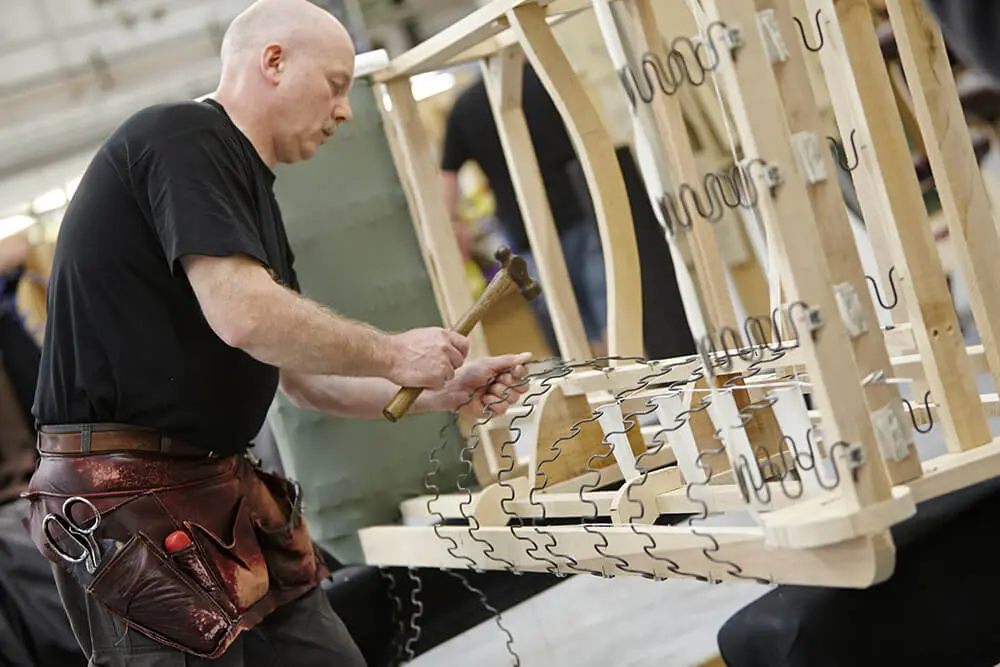
• Serpentine or no-sag springs: This type of spring is made up of metal wires that are fashioned into zig-zag shapes that are joined together and stretched from the front of the seat to the rear. Serpentine springs are one of the most widely used today as they are able to work successfully with a variety of different cushion fillings.
• Elastabelt webbing: To create this type of suspension, polyester fibres are paired with elastic threads to create webbing that is very durable and extendable. Each strand is woven from front to back and from side to side across the top of the seating area, resulting in a level surface for the cushion to sit upon. Elastabelt webbing is often used with foam cushion filler.
 EUR
EUR
 GBP
GBP
 USD
USD

Comments (0)